Velcro Patch Specifications & Options
A Velcro patch is a custom patch fitted with a hook-and-loop backing that attaches and detaches repeatedly without sewing or ironing. This page covers every specification and option for configuring a bespoke Velcro patch in the UK, backing type, patch material, border, size, colour matching and ordering details. Custom Velcro patches suit any application where you need to swap, remove or reposition a badge, from military uniforms to corporate workwear.
What Is a Velcro Patch?
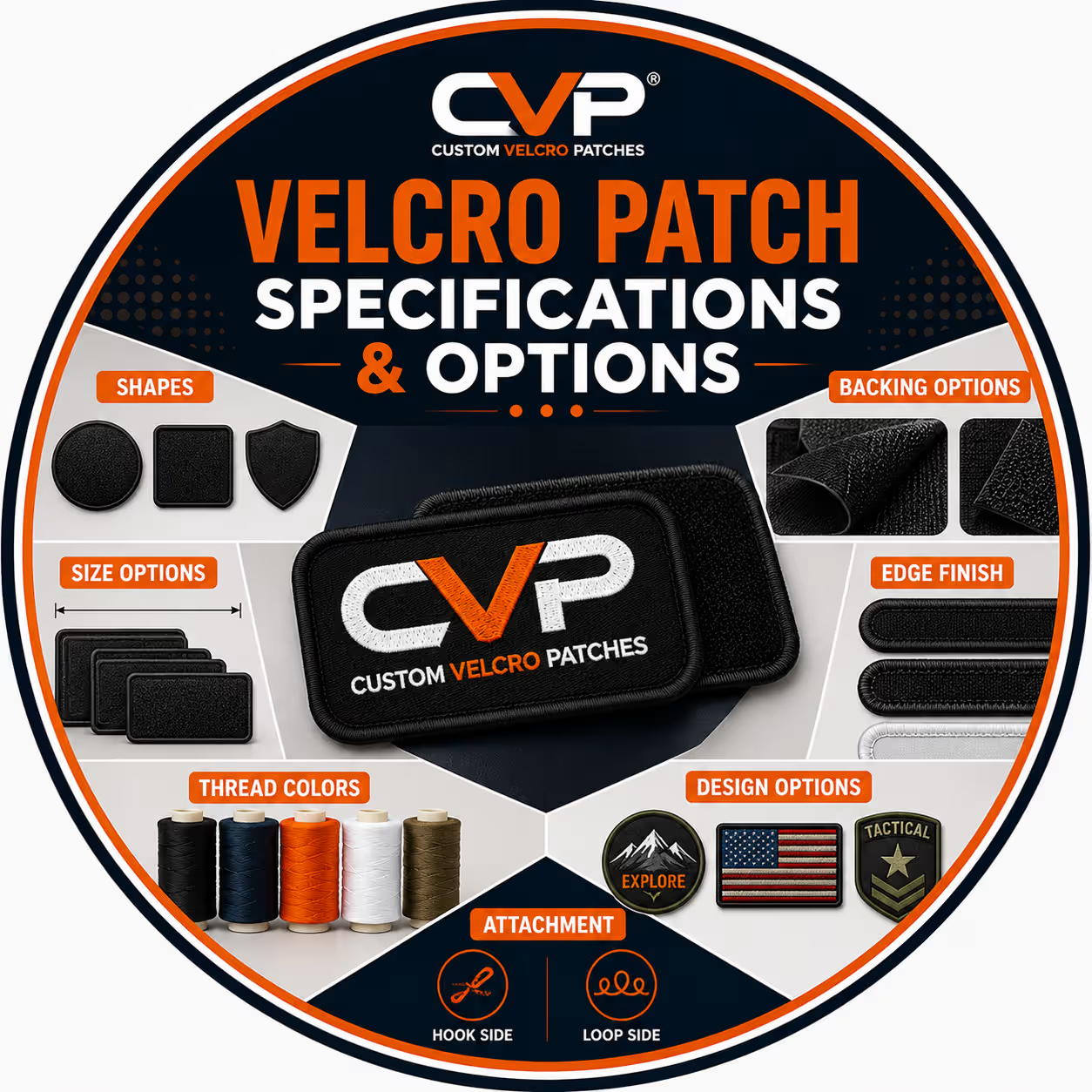
A Velcro patch is a two-part fastening patch that uses a hook surface and a loop surface to grip together. "Velcro" is the widely recognised trade name for the hook-and-loop fastener, so a Velcro patch and a hook-and-loop patch describe the same product. The hook side fixes to the back of the patch, and the loop side attaches to the garment or gear. When you press the two surfaces together, thousands of tiny hooks catch the soft loops and hold the patch firmly in place.
Velcro patches differ from standard patches in one defining attribute: they are removable. An iron-on patch bonds permanently to fabric, and a sew-on patch is stitched down for good, but a Velcro patch lifts off and reattaches as often as you need. This removability is the reason hook-and-loop backing dominates tactical, cadet and emergency-services kit, where rank slides, name tapes and unit badges change frequently.
The Two Components - Hook Side and Loop Side
Every hook-and-loop system has two halves, and a complete Velcro patch order involves both. Understanding which side goes where prevents the most common ordering mistake, receiving two patches that will not stick to each other.
Hook Side
The hook side is the rough, scratchy half of the fastener, and it bonds to the back of the patch during manufacture. Manufacturers heat-seal or sew the hook tape directly onto the patch backing, so the hook side arrives already fixed to your badge. The hook surface is firm to the touch and made from stiff nylon hooks that grip the soft loop fabric.
Loop Side
The loop side is the soft, fuzzy half, and it attaches to the garment, bag or panel that receives the patch. The loop fabric is supplied separately, you sew or stick it onto your jacket, plate carrier or uniform, then press the hook-backed patch onto it. Many UK garments, such as tactical vests and cadet jackets, already include loop panels, so you only need the hook-backed patch.
How the Two Sides Work Together
The hook side and the loop side form a mechanical bond when pressed together, and that bond releases cleanly with a firm pull. This pairing gives the patch its signature flexibility: attach it for parade, remove it for the wash, reposition it on a different jacket. For a full breakdown of which side suits which job, see our guide on the hook side versus loop side.
Velcro Patch Backing Options
Velcro patch backing comes in several configurations, and the right choice depends on how permanent you need the loop attachment to be. The hook side stays consistent on the patch, but the loop side offers genuine choice, and that choice affects durability, application method and cost.
Sew-On Loop Backing
Sew-on loop backing is the most durable loop option, and it stitches permanently onto the receiving garment. Tailors and uniform suppliers sew the loop fabric around its edge, which creates an attachment that survives industrial washing and years of daily wear. Sew-on loop is the standard choice for military, police and workwear applications because it withstands repeated patch swaps without peeling.
Adhesive (Stick-On) Loop Backing
Adhesive loop backing carries a peel-and-stick layer, and it bonds to smooth surfaces without sewing. You remove the protective film and press the loop fabric onto the target surface, which makes it ideal for hard panels, equipment cases and temporary displays. Adhesive loop is faster to apply than sew-on loop, though it holds best on clean, non-porous surfaces rather than soft fabric. Our comparison of sew-on versus adhesive loop backing explains which surface suits each method.
Single-Sided vs Double-Sided Backing
Single-sided backing applies the hook tape to one face of the patch, which is the standard build for almost every order. Double-sided backing is a specialist configuration where the patch carries different attachment methods on each side, and it serves niche uses such as flag patches that mount on either surface. Most buyers need single-sided hook backing, see single versus double backing to confirm which build your project requires.
Patch Material Options for Velcro Backing
Hook-and-loop backing attaches to almost any patch material, and the material you choose determines the look, texture and durability of the finished badge. A Velcro backing is an attachment method, not a patch type, so you first select your patch construction, then add the hook backing. The four most common materials for Velcro patches are embroidered, PVC, woven and printed.

Embroidered Velcro Patches
Embroidered Velcro patches use stitched thread to form the design, and they remain the most popular choice for uniforms and tactical kit. Embroidery gives the patch a raised, textured surface with a classic, heritage look, and a hook backing makes the badge fully removable. Embroidered patches carry a minimum thread count of around 1,000 stitches for crisp detail, and they pair naturally with a merrow border. Add a Velcro backing to embroidered patches when you need durable, removable rank slides or name tapes.

PVC / Rubber Velcro Patches
PVC Velcro patches use moulded rubber to form the design, and they deliver a waterproof, hard-wearing badge for outdoor and tactical use. PVC patches resist water, mud and abrasion, which makes them the standard choice for plate carriers, field kit and morale patches. The mould can be 2D flat or 3D raised relief, and the colour is locked into the rubber so it never fades. A hook backing turns a rugged PVC patch into a removable badge that survives the harshest conditions.
Woven Velcro Patches
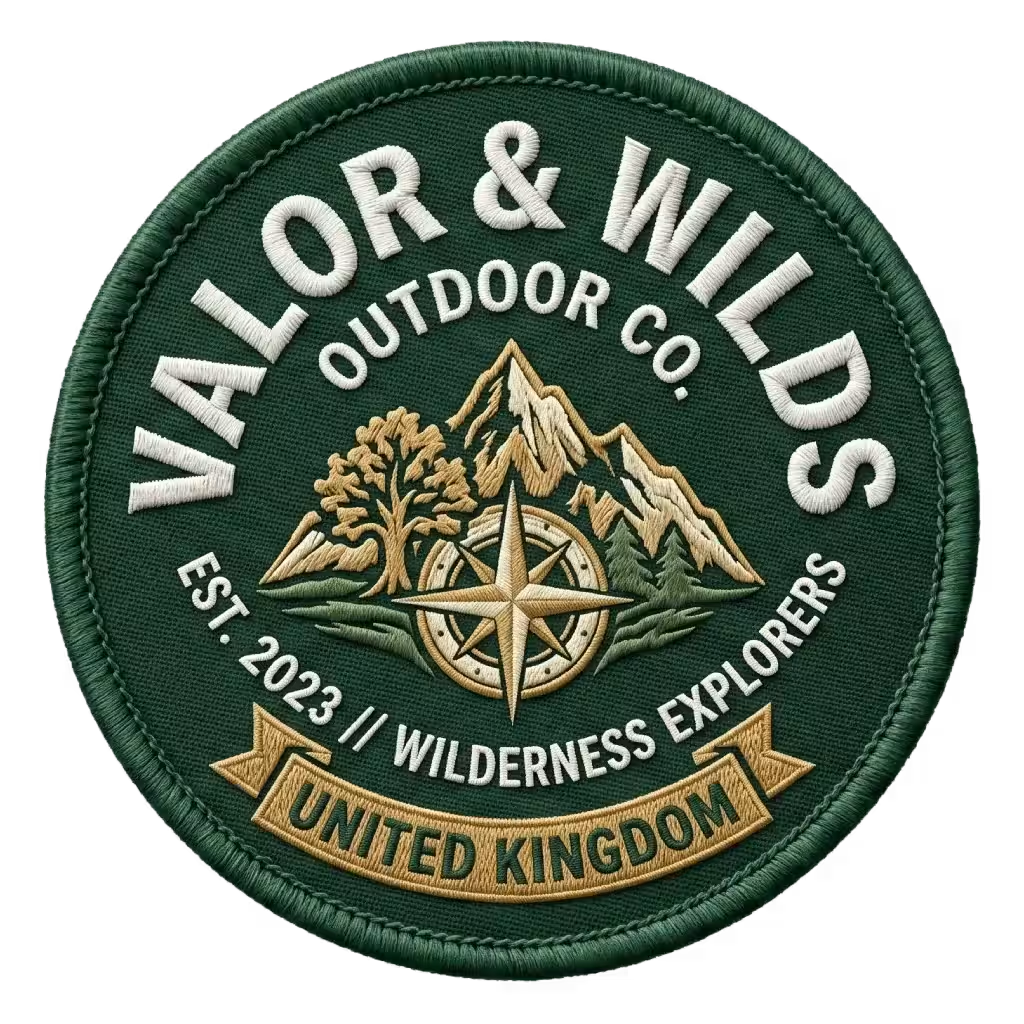
Woven Velcro patches use tightly woven thread to form the design, and they reproduce fine detail that embroidery cannot match. Woven construction creates a thinner, smoother patch with a flatter profile, which suits small logos, intricate text and detailed crests. The fine weave captures sharp edges and small lettering at sizes where embroidered stitches would blur. Choose a hook backing on woven patches when your design demands precision and a slim, lightweight finish.

Printed Velcro Patches
Printed Velcro patches use dye-sublimation or full-colour printing to form the design, and they handle photographic artwork and unlimited colours. Printed patches reproduce gradients, fine shading and complex imagery that thread-based methods cannot, which makes them ideal for event badges, promotional runs and detailed logos. The print sits on a smooth, lightweight surface, and a hook backing keeps the badge removable. Select a Velcro backing on printed patches for vivid, full-colour designs.
Border Options
Velcro patch borders define the edge finish of the patch, and the border type affects both durability and appearance. The border seals the patch perimeter, prevents fraying, and frames the design. Two border options dominate UK custom patch production: the merrow border and the laser-cut border.
Merrow (Overlocked) Border
A merrow border is a raised, overlocked stitched edge, and it forms the traditional finish on embroidered patches. The merrow machine wraps thread around the patch perimeter, which creates a clean, slightly raised rim that resists fraying for years. Merrow borders work best on simple shapes, circles, squares, shields and ovals, because the overlock machine follows straight and gently curved edges. The raised stitching gives the patch its classic, heritage appearance.
Laser-Cut (Die-Cut) Border
A laser-cut border is a precision-trimmed flat edge, and it allows complex, custom shapes that a merrow border cannot follow. The laser cuts the patch outline exactly to the artwork, which produces sharp corners, intricate outlines and bespoke silhouettes. Laser-cut borders suit detailed logos, lettering and any shape with tight angles. Compare both finishes in detail on our patch borders guide to choose the right edge for your design.
Size and Shape Specifications
Velcro patch size is measured by width and height, and the dimensions determine the level of detail your design can hold. Patch size influences thread count, legibility and price, so the right size balances visibility against cost. Hook-and-loop backing applies to patches of almost any size and shape.
Standard Velcro Patch Sizes
Standard Velcro patches range from around 50mm to 150mm across, and the most common rank slides and name tapes sit between 75mm and 100mm. Smaller patches carry simple logos and short text, and larger patches hold detailed crests and full unit insignia. Patch size is calculated as the average of width and height, which sets the price band for the order. Our patch sizing guide explains how to choose dimensions that keep your design sharp.
Custom Shapes and Die-Cutting
Custom shapes follow your artwork outline exactly, and die-cutting produces any silhouette you need. A patch can be round, square, shield-shaped or fully bespoke, and laser cutting trims the edge to match. Custom shapes pair best with a laser-cut border, which holds the precise outline that a merrow edge cannot. Shaped Velcro patches let you mirror a logo, badge or emblem in its true form.
Colour and Thread Specifications
Velcro patch colour is reproduced through Pantone matching, and accurate colour keeps your branding consistent across every patch. Thread count and stitch density control the detail and texture of embroidered designs. Both specifications determine how faithfully the finished patch reflects your original artwork.
Pantone Colour Matching
Pantone colour matching reproduces exact brand colours using PMS reference codes, and it guarantees consistency across repeat orders. You supply the Pantone code, and the manufacturer matches the thread, rubber or print to that exact shade. Pantone matching is essential for corporate, military and club patches where brand colour must stay identical batch after batch. See our colour matching guide for supplying accurate colour references.
Thread Count and Stitch Density
Thread count is the total number of stitches in an embroidered patch, and a higher count produces finer detail. Embroidered patches carry a minimum thread count of roughly 1,000 stitches, and dense stitching captures small text and intricate linework. Stitch density also affects the patch weight and stiffness, so detailed designs feel firmer and more substantial. Our stitch count guide explains how density shapes the final quality.
Ordering Specifications - MOQ, Pricing and Turnaround
Velcro patch ordering follows a clear set of specifications, and these figures help you plan budget and lead time. The minimum order quantity, pricing structure and turnaround time set the practical terms of every custom order. Use the data block below as a quick reference for your UK order.
- Backing type: Hook (on patch) + Loop (on garment)
- Material options: Embroidered · PVC · Woven · Printed
- Border options: Merrow · Laser-cut
- Standard sizes: 50mm – 150mm (custom shapes available)
- Colour matching: Pantone (PMS) matched
- Minimum order: 10–50 pieces
- Turnaround (UK): Standard 10–14 days · Express 5–7 days
- Delivery: Royal Mail / DPD tracked · BFPO available
Minimum order quantities for custom Velcro patches typically start between 10 and 50 pieces, and the unit price falls as quantity rises. Standard UK turnaround runs 10–14 days, and express production delivers in 5–7 days. We dispatch through Royal Mail and DPD with tracking, and we ship to BFPO addresses for forces personnel. For full pricing bands and order minimums, see our pricing and MOQ guide.
Velcro vs Iron-On vs Sew-On Patches
Velcro, iron-on and sew-on are three different attachment methods, and each one fixes a patch to fabric in a distinct way. The right method depends on whether you need the patch to be removable, semi-permanent or permanent. The table below compares the three across the attributes that matter most.
| Attribute | Velcro (Hook & Loop) | Iron-On | Sew-On |
|---|---|---|---|
| Removable | Yes | No | No |
| Repositionable | Yes | No | No |
| Permanence | Temporary | Semi-permanent | Permanent |
| Application | Press onto loop | Heat press / iron | Stitched |
| Best for | Military, tactical, workwear | Casual, home use | Maximum durability |
Velcro backing wins where patches change often, and sew-on backing wins where the patch never moves. Iron-on backing sits between the two, offering a quick home application without stitching. For a deeper breakdown of all three methods, read our Velcro vs iron-on vs sew-on comparison.
Our Customer Reviews
Frequently Asked Questions
Are Velcro patches removable?
Does a Velcro patch come with both sides?
Can any patch type have a Velcro backing?
Are Velcro patches washable?
What is the minimum order for custom Velcro patches in the UK?
Velcro Patch Specifications at a Glance
Velcro patch specifications combine a hook-and-loop backing with your choice of material, border, size and colour. Embroidered, PVC, woven and printed patches all accept hook backing, and you finish each with a merrow or laser-cut border in any custom size. Pantone matching keeps your colours exact, low minimums make small runs affordable, and fast UK turnaround gets your removable badges into service quickly. Whether you need tactical rank slides, corporate workwear badges or club insignia, a custom Velcro patch gives you a durable badge you can attach, remove and reposition at will.
Ready to configure your order? Get your free quote today and our UK team will match your artwork, colours and backing to spec.