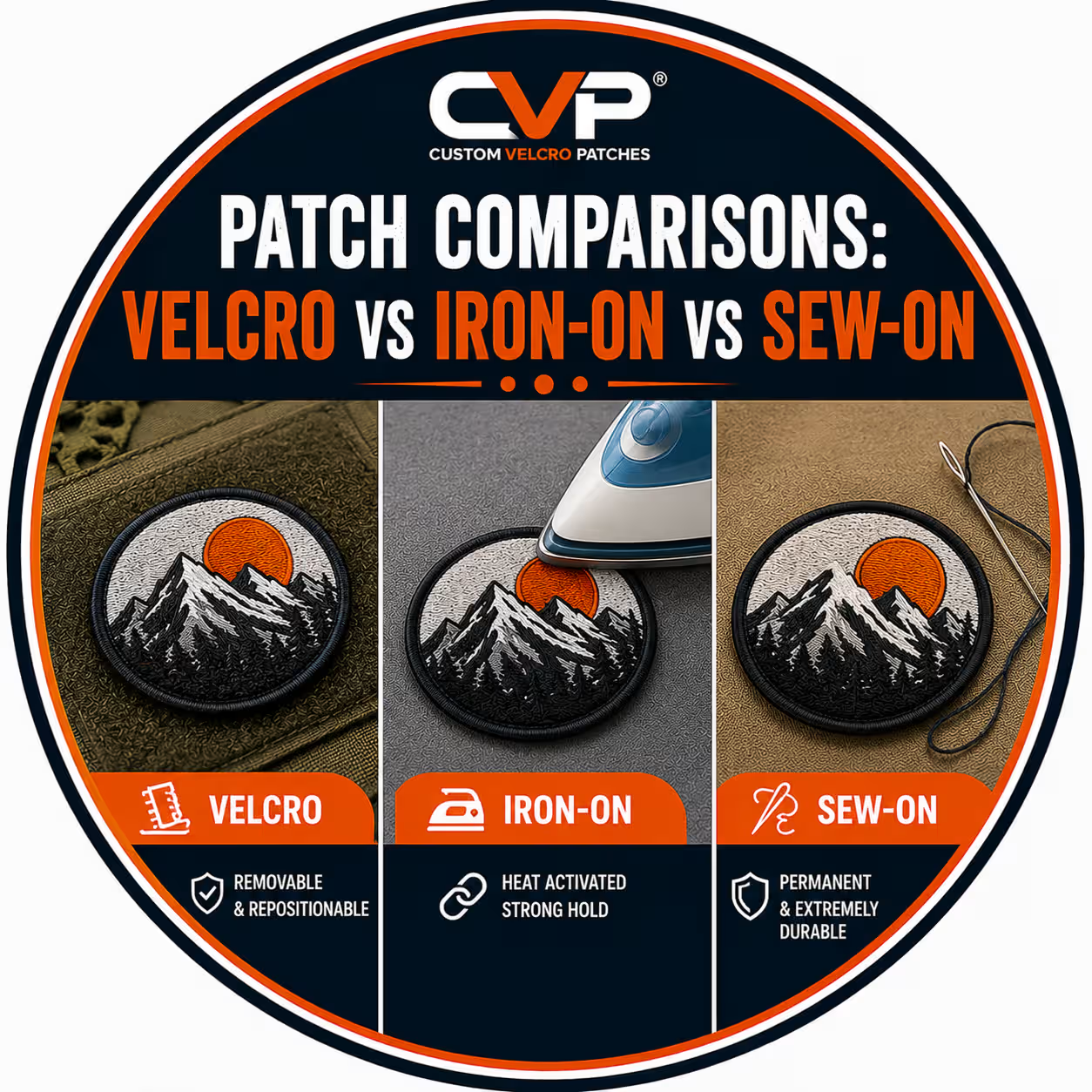
Patch Comparisons: Velcro vs Iron-On vs Sew-On
Patch attachment methods determine how a custom patch fixes to a garment, with three main backings: hook-and-loop (Velcro), heat-activated iron-on, and stitched sew-on. This guide compares the three methods so you can choose the right backing for your fabric, use case, and budget. Every backing type changes how a patch wears, washes, and lasts, which makes the backing decision as important as the patch design itself. Custom patches in the UK ship with any of these three backings, and the correct choice depends on how you intend to use the badge.
What Are Patch Attachment Methods?
Patch attachment methods are the backing systems that bond a finished patch to fabric. A backing is the material layer on the reverse of the patch, and it carries the entire job of holding the badge in place. Three backing types dominate UK custom patch orders: hook-and-loop, iron-on, and sew-on. A fourth option, peel-and-stick adhesive backing, exists for temporary and single-use jobs, such as event passes and short promotions.
Each backing solves a different problem. Hook-and-loop backing makes a patch removable. Iron-on backing makes a patch quick to apply at home. Sew-on backing makes a patch permanent and durable. The backing you select controls three attributes: removability, durability, and application effort. Understanding these three attributes is the fastest route to the right decision, so the comparison table below sets them side by side before each method is explained in full.
Velcro vs Iron-On vs Sew-On at a Glance
The table compares the three backings across the attributes that matter most when ordering custom patches. Use it as a quick reference, then read each section for the detail behind the rating.
| Attribute | Velcro (Hook-and-Loop) | Iron-On | Sew-On |
|---|---|---|---|
| Removable | Yes, detaches and reattaches | No, permanent once applied | No, permanent once stitched |
| Durability | High when the loop panel is fitted | Medium, weakens with washing | Highest, strongest hold |
| Best fabric | Tactical gear, fitted loop panels | Cotton, denim, smooth fabrics | All fabrics, including leather and nylon |
| Washing | Patch removed before washing | Tolerates limited washing | Withstands frequent commercial washing |
| Application | Press onto loop panel | Heat press or household iron | Hand or machine stitching |
| Relative cost | Higher, two-part system | Lowest, included on most orders | Low, often included, adds labour |
| Best use | Military, police, swappable ID | Casual jackets, bags, DIY | Workwear, uniforms, club badges |
The table shows a clear pattern: Velcro wins on flexibility, iron-on wins on speed, and sew-on wins on durability. No single backing wins on every attribute, which is why the right answer depends on your project. The sections below explain how each method works and where it performs best.
Velcro (Hook-and-Loop) Patches
Velcro patches are custom patches that attach through a two-part hook-and-loop fastening system. The patch carries the hook side on its backing, and the garment carries the loop side as a sewn or supplied panel. This two-part design makes Velcro patches the only removable backing of the three, which is the attribute that defines the whole category.
How Velcro Patches Work
A Velcro patch works by pressing the stiff hook layer against a soft loop panel. The hook side grips the loop fibres, the two surfaces lock together, and the patch holds firm under daily wear. Pulling the patch away releases the hooks, which lets you swap, reposition, or remove the badge without tools or heat. The loop panel must already exist on the garment, so tactical vests, plate carriers, and modular jackets ship with loop fields built in. Without a loop panel, a Velcro patch has nothing to grip, which is the single most common ordering mistake in this category.
Best Uses for Velcro Patches
Velcro patches suit any role that needs patches swapped quickly and often. Military and cadet units use hook-and-loop badges to change rank, name tapes, and unit insignia between duties. Police and security teams rely on removable patches to switch identification across shifts. Workwear buyers fit Velcro morale patches and company logos that staff can move between jackets. The shared requirement across these uses is change, Velcro is the answer whenever a patch must come off as easily as it goes on.
Pros and Cons of Velcro Backing
Velcro backing carries clear strengths and clear trade-offs:
- Removable and reusable - the patch detaches and reattaches an unlimited number of times.
- No heat or sewing - application needs no iron, no needle, and no skill.
- Field-friendly - units change insignia in seconds, which suits tactical and uniform roles.
- Higher cost - the two-part system adds material and price over a plain backing.
- Needs a loop panel - the garment must carry loop fabric, or the patch will not hold.
- Adds bulk - the raised fastening sits proud of the fabric, which looks heavy on fashion garments.
Velcro backing is the right choice when removability outranks every other factor. When a patch needs to stay put for the life of the garment, iron-on and sew-on backings serve better, and the next section explains the fastest of those two.
Iron-On Patches
Iron-on patches are custom patches that attach through a heat-activated adhesive backing. The backing carries a thin glue film that melts under heat and bonds the patch to fabric as it cools. This adhesive layer makes iron-on the fastest backing to apply, which is the attribute that defines the category and explains its popularity for home and DIY projects.
How Iron-On Patches Work
An iron-on patch works by melting its adhesive film against the garment. Heat softens the glue, pressure pushes the patch into the weave, and cooling sets the bond hard. A household iron or a heat press supplies the heat, a press cloth protects the fabric, and ten to fifteen seconds of firm pressure completes the bond. The adhesive grips smooth, heat-tolerant fabrics best, so cotton and denim hold an iron-on patch reliably. Synthetic and waterproof fabrics resist the bond, because the glue cannot key into a sealed surface, and the patch peels at the edges over time.
Best Uses for Iron-On Patches
Iron-on patches suit casual garments and quick personal projects. Hobbyists fix iron-on badges to denim jackets, tote bags, and backpacks where the bond faces light, occasional wear. Schools and scout groups use iron-on backings on shirts and sashes that parents apply at home without a sewing machine. Event organisers choose iron-on patches for short-run merchandise that does not face heavy laundering. The shared requirement across these uses is speed without tools, iron-on is the answer whenever a patch must go on fast and the garment sees gentle use.
Pros and Cons of Iron-On Backing
Iron-on backing carries clear strengths and clear limits:
- Fast application - a household iron bonds the patch in under a minute.
- No sewing skill - the method needs no needle, thread, or machine.
- Lowest cost - iron-on backing comes included on most custom patch orders.
- Weakens with washing - the adhesive bond loosens after repeated wash cycles.
- Limited to smooth fabrics - nylon, leather, and waterproof fabrics reject the glue.
- Semi-permanent - the bond holds for casual wear but not for daily, high-friction use.
Iron-on backing is the right choice when speed and low cost matter more than longevity. When a patch must survive frequent washing and years of wear, sew-on backing delivers the strength that adhesive cannot, and the next section explains why.
Sew-On Patches
Sew-on patches are custom patches that attach through stitching directly into the garment. The patch fixes to fabric with thread, applied by hand or sewing machine around the merrow border or edge. This stitched bond makes sew-on the most durable backing of the three, which is the attribute that defines the category and the reason it remains the standard for workwear and uniforms.
How Sew-On Patches Work
A sew-on patch works by anchoring the patch to the garment with thread. A needle passes the thread through the patch edge and the fabric, the stitches lock the two layers together, and the bond holds for the life of the garment. Hand stitching suits single patches and small jobs, while a sewing machine speeds batches and uniform runs. The stitched edge grips every fabric type, so leather, nylon, wool, and waterproof materials all hold a sew-on patch where an iron-on bond would fail. The thread carries the load rather than glue, which is why sew-on survives commercial laundering that destroys adhesive backings.
Best Uses for Sew-On Patches
Sew-on patches suit garments that face heavy wear and frequent washing. Workwear and corporate uniforms rely on stitched logo patches that endure daily use and industrial laundry. Sports clubs and motorcycle clubs sew club badges and back patches onto jackets for a permanent, traditional finish. Schools fit sew-on crests to blazers that last several years and several owners. The shared requirement across these uses is permanence and durability, sew-on is the answer whenever a patch must stay put and look sharp through years of service.
Pros and Cons of Sew-On Backing
Sew-on backing carries clear strengths and a single trade-off:
- Strongest hold - stitched thread outlasts every other backing type.
- Works on all fabrics - leather, nylon, wool, and denim all accept stitching.
- Wash-resistant - the bond survives frequent and commercial laundering.
- Professional finish - the flush stitched edge suits uniforms and formal garments.
- Needs sewing - application requires a needle, thread, and basic stitching skill.
- Slower to apply - stitching takes longer than heat or hook-and-loop.
Sew-on backing is the right choice when durability outranks convenience. With all three methods now defined, the decision comes down to matching the backing to your fabric, use case, and washing routine, which the next section sets out as a simple route to your answer.
Which Patch Type Should You Choose?
The right patch backing depends on three factors: the fabric, the use case, and the washing routine. Match your project against each factor below, and the correct backing becomes clear. Many UK buyers order one patch design with mixed backings, sew-on for jackets, iron-on for casual shirts, and Velcro for tactical kit, so you need not settle on a single method for every garment.
Choose by Fabric
Fabric decides which backings will hold. Cotton and denim accept all three backings, which gives the widest choice for everyday garments. Nylon, leather, and waterproof fabrics reject adhesive, so sew-on backing is the safe choice for these surfaces. Tactical gear with a fitted loop panel suits Velcro, because the hook side grips the supplied loop field. Start with the fabric, because it rules out the backings that will not bond.
Choose by Use Case
Use case decides how the patch must behave. Swappable identification, rank slides, and morale patches call for Velcro, because the role demands quick change. Casual jackets, bags, and short-run merchandise suit iron-on, because the wear is light and the budget matters. Uniforms, workwear, and club jackets call for sew-on, because the garment faces years of daily service. Match the method to the job, and the patch performs as intended.
Choose by Durability and Washing
Washing routine decides whether a bond survives. Garments washed rarely hold an iron-on patch through their lifespan. Garments washed weekly or laundered commercially need sew-on backing, because stitching withstands the heat, agitation, and detergent that loosen adhesive. Velcro patches sidestep washing entirely, because the badge lifts off before the garment goes in the machine. Weigh the wash frequency last, and it confirms the backing that fabric and use case have already pointed toward.
Cost and Value Compared
Patch backing affects cost, but the difference is small against the patch itself. Iron-on backing carries the lowest cost, because most UK suppliers include it free on standard orders. Sew-on backing also comes included on most orders, and it adds only the labour of stitching at your end. Velcro backing costs more, because the two-part hook-and-loop system adds material to every piece. The price gap between backings stays minor next to the factors that drive the real cost: patch type, size, stitch count, and order quantity.
Value depends on lifespan rather than purchase price. A sew-on patch that lasts the life of a uniform delivers better value than a cheaper iron-on patch that peels within a year. A Velcro patch that moves between ten garments earns its higher price through reuse. Minimum order quantities in the UK typically start at 10 to 50 pieces, and standard turnaround runs 10 to 14 working days with tracked Royal Mail delivery. For a full cost breakdown across patch types, see our guide to patch cost and value, and check current pricing and minimum order quantities before you order.
Is "Velcro" a Brand or a Patch Type?
No, "Velcro" is a registered trademark, not a generic patch type. Velcro Companies owns the Velcro® brand, and the correct generic term for the fastening is hook-and-loop. The industry uses "Velcro patch" as everyday shorthand, because buyers search for the brand name they know. The product itself is a hook-and-loop patch, built from a hook side and a loop side that fasten together. The distinction matters for accurate ordering and for understanding what you receive, and our guide to the Velcro trademark explained sets out the full background.
Our Customer Reviews
Frequently Asked Questions
Are velcro patches removable?
Do iron-on patches last as long as sew-on patches?
Can you put a velcro patch on any fabric?
Is sew-on the most durable patch backing?
Can a patch combine iron-on and sew-on backing?
Which patch backing is best for tactical gear?
Summary
Choosing a patch backing comes down to matching the method to the job. Pick Velcro when the patch must come off and go back on, pick iron-on when speed and low cost lead and the garment sees gentle use, and pick sew-on when durability and frequent washing decide the outcome. Fabric rules out the backings that will not bond, use case sets how the patch must behave, and washing routine confirms the final choice. For most UK buyers, the smartest approach is to mix backings across a single design, fitting each garment with the method that suits it. Explore the full velcro vs iron-on vs sew-on breakdown, compare velcro vs iron-on directly, or use our guide to choosing the right patch type to settle your decision. Browse all patch types and hook-and-loop options to start your order.